
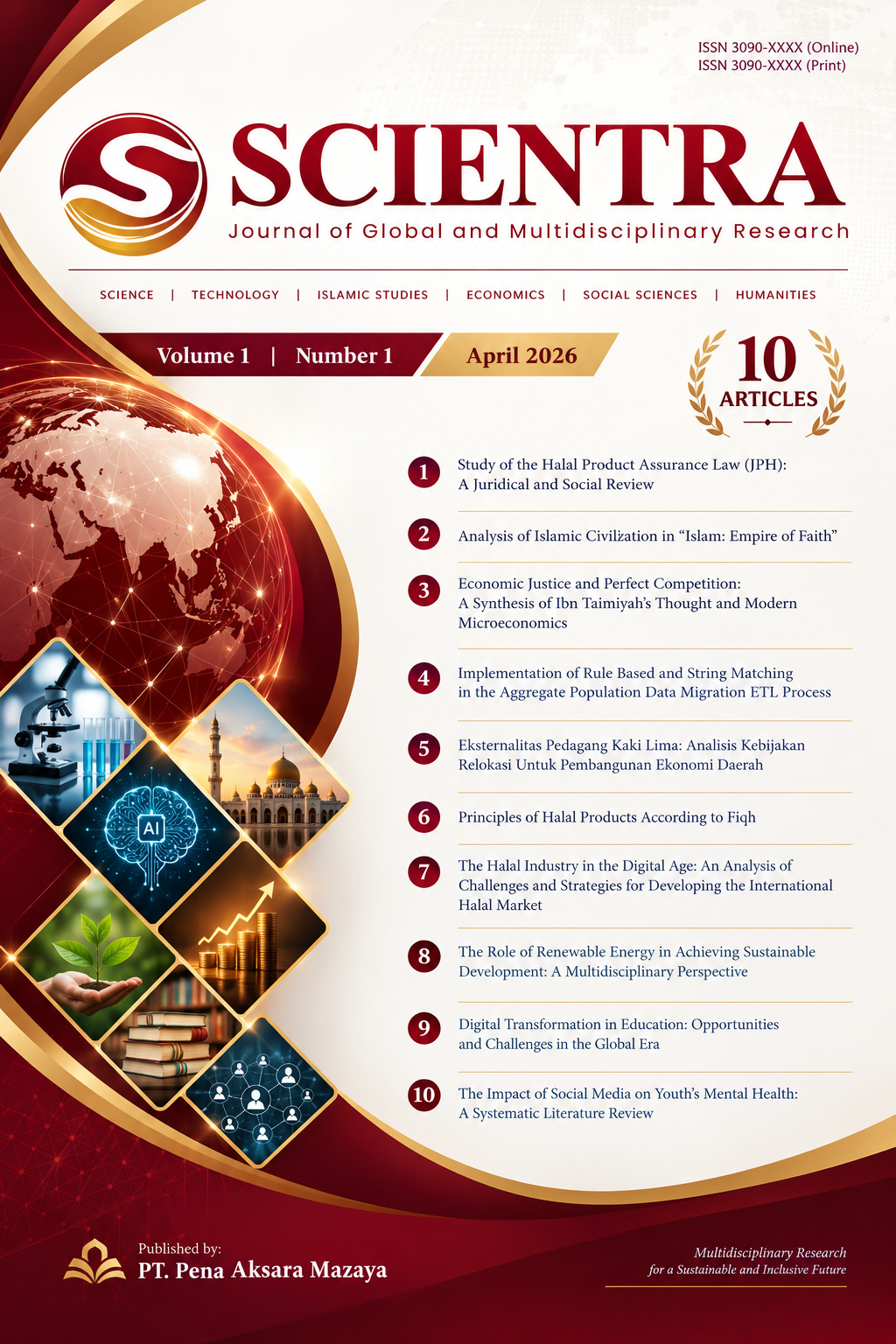
The Halal Industry in the Digital Age: An Analysis of Challenges and Strategies for Developing the International Halal Market
Article Sidebar
Main Article Content
Abstract
The halal industry is experiencing rapid growth in line with rising global demand for products and services that comply with Sharia principles. Advances in digital technology are driving the transformation of the halal industry through the use of e-commerce, social media, blockchain, and digital certification systems. However, alongside these opportunities, the halal industry also faces a range of complex challenges, such as difficulties in monitoring halal products, differences in certification standards across countries, limitations in technology and digital literacy among business operators, counterfeiting of halal labels, and declining consumer confidence in product safety on digital platforms. This study aims to analyse the challenges facing the halal industry in the digital era, as well as strategies for strengthening the halal ecosystem based on technology and Sharia principles. The method used in this study is a qualitative approach employing library research through the analysis of various literature, scientific journals, regulations, and academic sources related to the digital halal industry. The research findings indicate that digitalisation presents significant opportunities for the expansion of the international halal market; however, this requires adaptive regulatory support, the harmonisation of global halal certification standards, the strengthening of cybersecurity, and the enhancement of digital literacy among businesses and consumers. Furthermore, the implementation of technologies such as QR codes and blockchain is considered capabale of enhancing transparency. Therefore, collaboration is required between the government, certification bodies, academics, business operators and the public in building a modern, safe and globally competitive halal industry ecosystem.
Downloads
Article Details
Section
How to Cite
References
[1] et al Sukoso., Ekosistem Industri Halal. Jakarta: Departemen Ekonomi dan Keuangan Syariah, 2020.
[2] A. P. Dewi and M. I. Hakiki, “Transformasi Digital dalam Industri Halal di Indonesia (Studi Implementasi Teknologi Blockchain dalam Proses Sertifikasi Halal),” Indo-Fintech Intellectuals J. Econ. Bus., vol. 3, no. 2, pp. 360–370, 2023, doi: 10.54373/ifijeb.v3i2.240.
[3] N. Y. Zakiyah, A. P. Dewi, and ..., “Strategi Pemasaran dan Urgensi Sertifikasi Halal di Era Digital,” … Uin Sunan Gunung …, vol. 4, no. 2, pp. 29–44, 2024, [Online]. Available: http://proceedings.uinsgd.ac.id/index.php/proceedings/article/view/2486%0Ahttp://proceedings.uinsgd.ac.id/index.php/proceedings/article/download/2486/1955
[4] M. K. Mubarok, F. K., & Imam, “Halal Industry in Indonesia; Challenges and Opportunities,” J. Digit. Mark. Halal Ind., vol. Vol. 2, 2020.
[5] Z. Permata, H. Arif, and M. Firnanda Chumairo, “Resilien Ekonomi Umat: Tantangan dan Prospek Industri Halal Pasca Krisis Pandemi Covid-19,” Proc. Islam. Econ. Business, Philanthr., vol. 2, no. 1, pp. 352–365, 2023.
[6] Menteri Hukum dan Hak Asasi Manusia, “UU No.33 Tahun 2014 (2014),” UU No.33 Tahun 2014, no. 1, 2014, [Online]. Available: https://peraturan.bpk.go.id/Home/Details/38709/uu-no-33-tahun-2014
[7] A. S. Hidayat and M. Siradj, “Sertifikasi Halal dan Sertifikasi Non Halal pada Produk Pangan Industri,” AHKAM J. Ilmu Syariah, vol. 15, no. 2, pp. 199–210, 2015, doi: 10.15408/ajis.v15i2.2864.
[8] M. L. Rahayuningsih, E., & Ghozali, “Sertifikasi Produk Halal dalam Perspektif Mashlahah Mursalah.,” J. Ilm. Ekon. Islam, vol. Vo. 7 No., 2021.
[9] S. Mahmood, F., Siddiqui, G., Rehman, A., & Mohd Yusof, “Blockchain for Halal Economy: A case study in Halal Ecosystem,” AIMS Conf. 2016 SMEs a Rapidly Chang. Bus. Environ., 2016.
[10] F. Istiqlal, “Membangun Global Halal Hub Indonesia: Strategi dan Peluang untuk Mencapai Kompetitif di Pasar Global,” Halal Res. J., vol. 3, no. 2, pp. 72–85, 2023, doi: 10.12962/j22759970.v3i2.614.
[11] R. Qoniah, “Tantangan dan Strategi Peningkatan Ekspor Produk Halal Indonesia di Pasar Global,” Halal Res. J., vol. 2, no. 1, pp. 52–63, 2022, doi: 10.12962/j22759970.v2i1.246.
[12] A. P. Fauzan, A. Athoillah, and A. N. Salam, “Optimization of Halal Industrial Products with the Assistance of Digital Technology in the Industrial Revolution Era 4.0,” J. Ekon. Syariah, vol. 8, no. 2, pp. 158–169, 2023, doi: 10.37058/jes.v8i2.7778.
[13] K. Haidar, “Intention to Halal Products In The World Markets,” Interdiscip. J. Res. Bus. Dep. Bus. Manag., 2011.
[14] K. F. Fadhli, “Meningkatkan Daya Saing UMKM Melalui Sertifikasi Halal,” Jumat Ekon. J. Pengabdi. Masy., vol. Vol. 5 No., 2024.
[15] N. Yuslem, Ulumul Hadis. Jakarta: Mutiara Sumber Dewi, 1998.
[16] & N. Purba, N., Yahya, M., Revolusi Industri 4.0: Peran Teknologi Dalam Eksistensi Penguasaan Bisnis dan Implementasinya. 2021.
[17] V. Purnama Putri and S. Nastiti Andharini, “Pendampingan Umkm Dalam Memenuhi Persyaratan Sertifikasi Halal Untuk Meningkatkan Daya Saing,” Stud. Kasus Inov. Ekon., vol. 07, no. 02, pp. 189–196, 2023, [Online]. Available: http://ejournal.umm.ac.id/index.php/skie
[18] M. Z. Ulhaq, “Sertifikasi Halal dan Implikasinya Bagi Pelaku UMKM di Kota Bima,” J. PenKoMi Kaji. Pendidik. dan Ekon., vol. Vol. 7 No., 2024.
[19] R. Japar, I. Paraikkasi, and C. Muthiadin, “Peran Lembaga Sertifikasi Halal dalam Membangun Ekosistem Halal... PERAN LEMBAGA SERTIFIKASI HALAL DALAM MEMBANGUN EKOSISTEM HALAL: TANTANGAN DAN PELUANG,” Int. J. Mathla’Ul Anwar Halal Issues, vol. 4, no. 2, pp. 34–44, 2024.
[20] E. T. Rahayu, A. Rohman, U. T. Madura, and K. Bangkalan, “Analisis strategi aspek manajemen industri halal pada mie gacoan dikota tuban,” vol. 2, no. 6, 2024.
[21] A. S. Daulay, I. Imsar, and R. D. Harahap, “Strategi Pengembangan Pasar Digital dalam Mendukung Industri Fashion Halal Di Indonesia,” AL-MANHAJ J. Huk. dan Pranata Sos. Islam, vol. 5, no. 1, pp. 1035–1042, 2023, doi: 10.37680/almanhaj.v5i1.2918.
[22] N. Lisdiana, “Pengaruh Kualitas Produk, Kepercayaan, Dan Keamanan Terhadap Keputusan Pembelian Konsumen Secara Onlinedi Online Shop Lazada,” J. Ekon. Ekon. Syaria, vol. 4, no. 2, pp. 1356–1367, 2021.
[23] J. Jefryansyah and M. Muhajirin, “Analisis Pengaruh Kepercayaan Dan Keamanan Terhadap Keputusan Pembelian Barang Secara Online,” Target J. Manaj. Bisnis, vol. 2, no. 1, pp. 85–94, 2020, doi: 10.30812/target.v2i1.703.
[24] F. Faraby, M. E., & Rozi, “Potensi Kabupaten Bangkalan Menjadi Destinasi Wisata Halal,” J. Ilm. Ekon. Islam, vol. Vol. 7 No., 2021.
[25] S. Saharani, U. Islam, N. Siber, and S. Nurjati, “Finotec : Journal of Islamic Finance and Economics Transformasi Strategi Pemasaran Halal dalam Era Digitalisasi,” vol. 2, pp. 198–213, 2025.
[26] M. Nizar, “Tantangan dan Strategi Pemasaran Produk Halal di Indonesia,” MALIA J. Ekon. Islam, vol. Vol. 13 No, 2021.
[27] A. M. Purwaningsih, “Transformasi Digital Marketing dan Sertifikasi Halal Untuk Pemberdayaan UMKM di Desa Sridadi,” Kampelmas, vol. Vo. 3 No., 2024.
[28] H. P., “Indonesian Halal Food Industry: Development, Opportunities and Challenges on Halal Supply Chains,” J. Stud. Humanit., 2019.
[29] B. &. Maksudi, “Faktor-faktor Yang Mempengaruhi Sertifikasi Halal dalam,” J. Ilm. Ekon. Islam, vol. Vol. 9 No., 2023.